

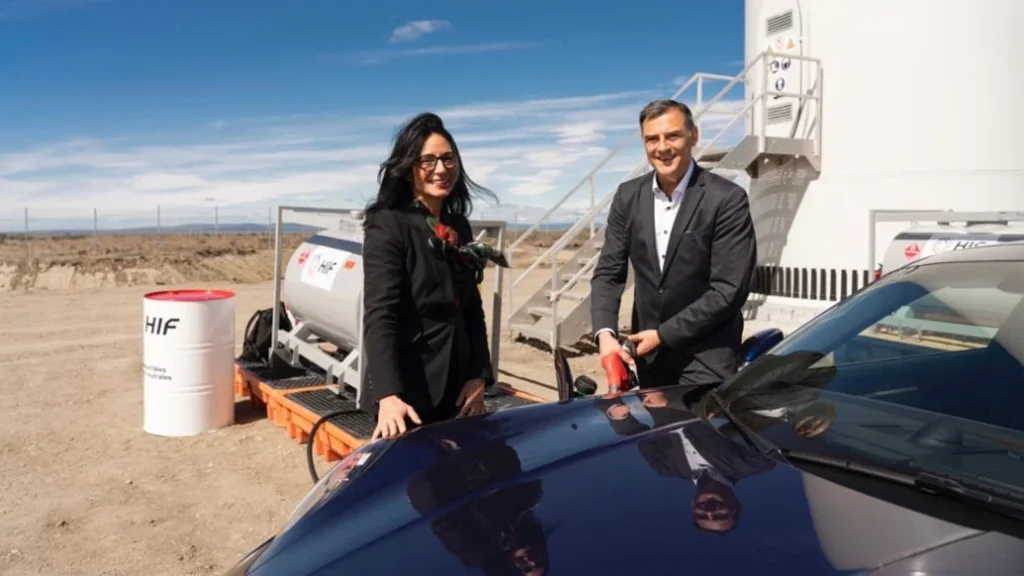
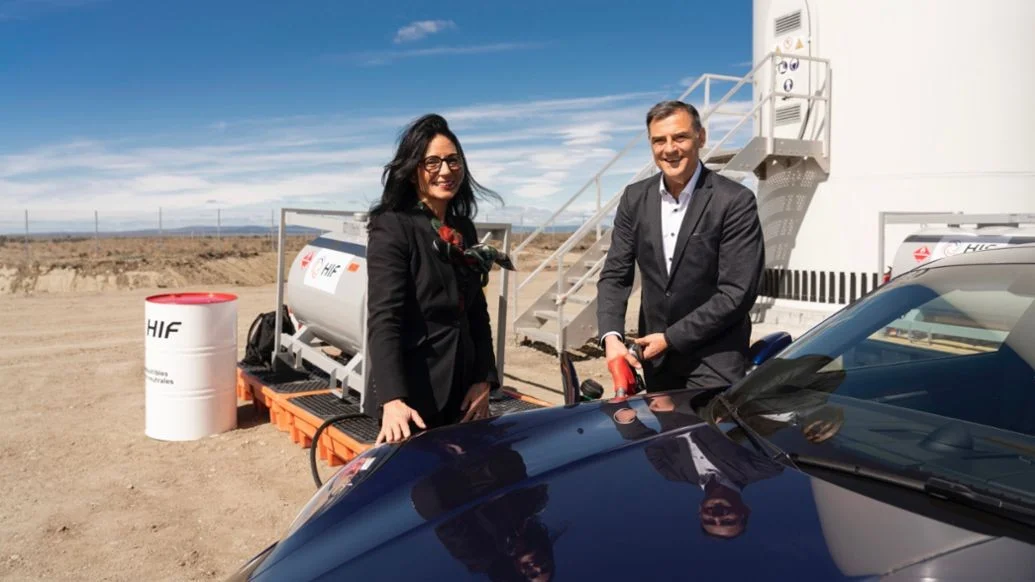
In December 2022, on the windswept plains of Chilean Patagonia, a Porsche executive filled a 911 with fuel made from wind, water and carbon dioxide — and drove away.
The moment was presented as a possible future for the internal-combustion engine. Behind the project stood Porsche, Siemens Energy, ExxonMobil, Baker Hughes and HIF Global. The ambition was enormous: after an initial pilot phase of around 130,000 liters per year, production was expected to rise to tens of millions of liters and later to hundreds of millions.
Three and a half years later, Haru Oni remains a pilot-scale facility. The plant is operating, its fuel has been used in Porsche motorsport and demonstration projects, and its technology chain has been proven. But the large commercial expansion originally associated with the project has still not reached a final investment decision.
This is not primarily a story of failed engineering. It is a story about efficiency, cost, regulation and — above all — the lack of guaranteed long-term demand.
A historic opening — and an unfinished scale-up
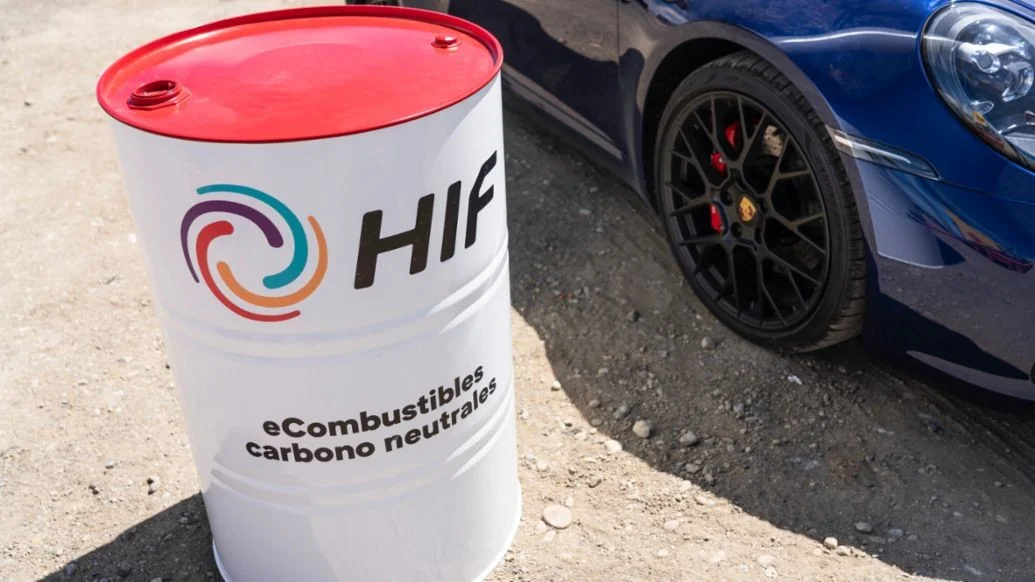
In December 2022, something engineers had discussed for decades became real on a wind-blasted plateau near Punta Arenas. Michael Steiner, Porsche’s board member for Research and Development, filled a Porsche 911 with synthetic fuel produced from renewable electricity, hydrogen and carbon dioxide.
The event was treated as historic. Headlines suggested that synthetic fuels could preserve part of the internal-combustion fleet in a rapidly electrifying world. The project brought together major industrial names, including Porsche, Siemens Energy and ExxonMobil, while HIF Global raised substantial company-level investment to develop e-fuel projects in Chile and other markets.
The original scale-up targets were striking. The pilot facility was designed for approximately 130,000 liters of e-gasoline per year. Earlier project communications envisioned production increasing to roughly 55 million liters and later to approximately 550 million liters.
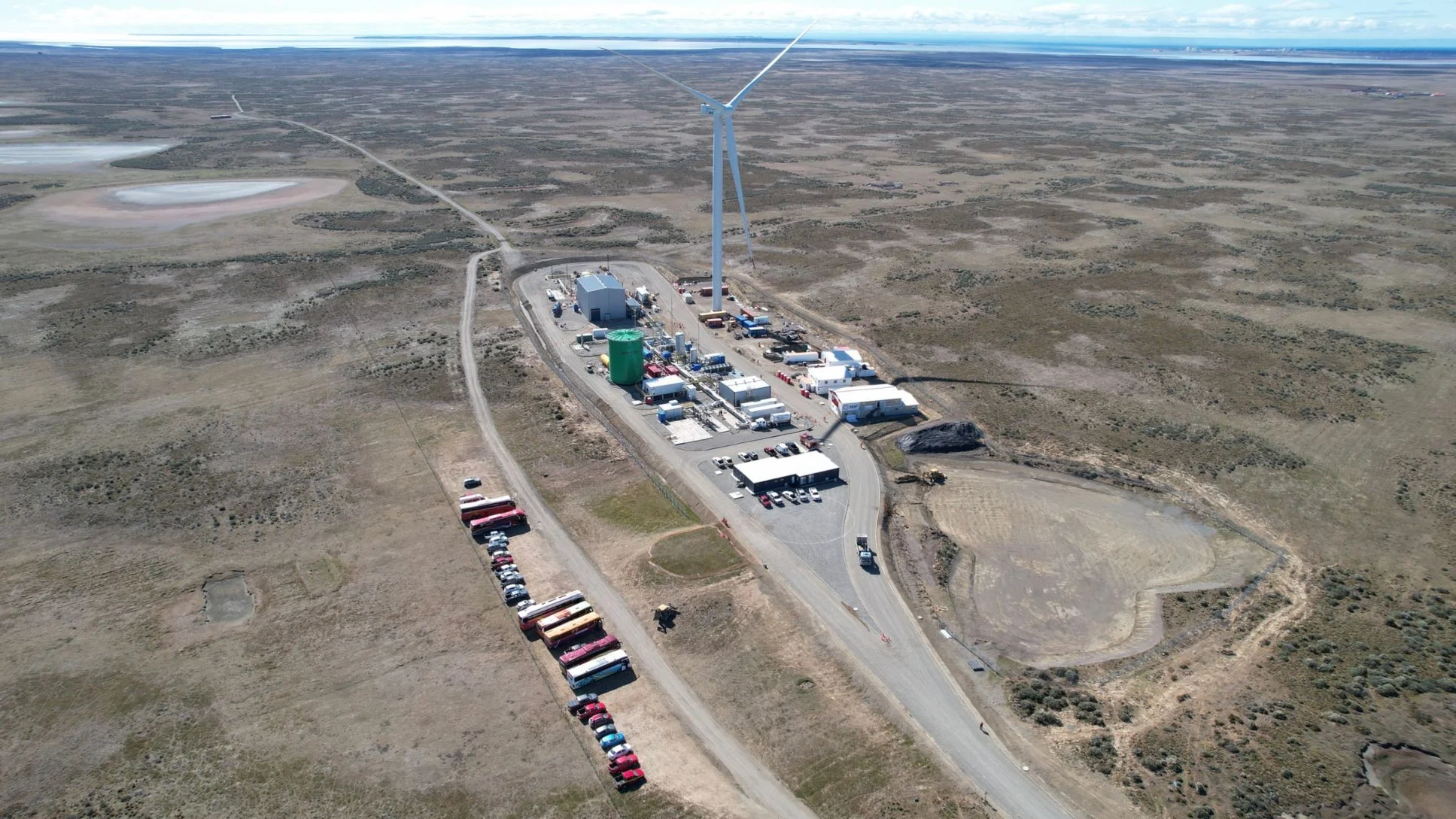
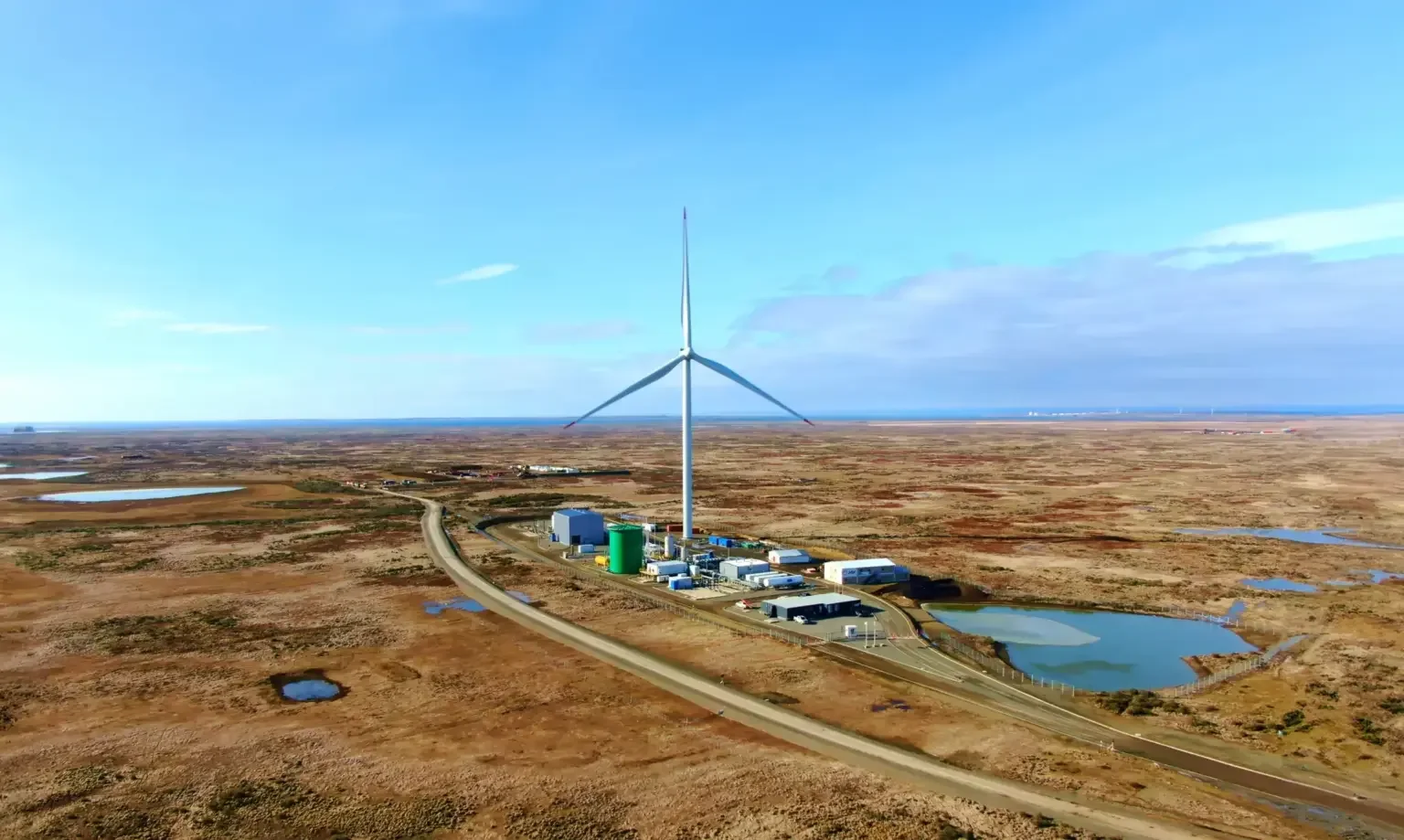
Today, Haru Oni still operates at its pilot-scale design capacity of up to 130,000 liters per year. HIF reports that the facility remains active, holds relevant certifications and has supplied fuel for Porsche events and motorsport applications. Meanwhile, the proposed commercial-scale Cabo Negro facility — an approximately $830 million project — received environmental approval in late 2025, but environmental approval is not the same as a final investment decision or construction start.
That distinction matters. Haru Oni has demonstrated that the production chain can function. What it has not yet demonstrated is that synthetic gasoline for passenger cars can be produced and sold at commercial scale under current market conditions.
The technology works. The economics do not.
Haru Oni achieved something technically important: it integrated a complete Power-to-X production chain at one site.
Wind power → electrolysis → green hydrogen → methanol synthesis → methanol-to-gasoline conversion → synthetic gasoline.
The chemistry worked. The difficult part was the arithmetic.
Pilot-stage e-fuel has been widely reported as costing around $10 per liter or more, depending on what costs are included. Large-scale projects aim to reduce production costs significantly, but independent estimates still show a broad and uncertain range. Fraunhofer ISI has cited study estimates of approximately €1.20 to €3.60 per liter by 2050 before taxes, levies, distribution and retail margins.
The deeper problem is energy efficiency. A widely cited Transport & Environment analysis estimated that direct battery-electric mobility can deliver around 73% of the original renewable electricity to the wheels, while drop-in electrofuels deliver roughly 13%.
For passenger cars, synthetic fuel does not merely face a temporary cost disadvantage. It faces a structural efficiency disadvantage created by multiple energy-conversion steps.
This does not make e-fuels useless. Liquid synthetic fuels may remain valuable where batteries are difficult to use — including parts of aviation, shipping, heavy industry, motorsport and the existing vehicle fleet. But it makes a mass-market replacement for gasoline in everyday passenger cars much harder to finance.
It is not the hardware. It is the demand.
If the efficiency gap is so large, why pursue a commercial phase at all? Because the strongest potential markets for e-fuels are not necessarily ordinary passenger cars. They are sectors in which direct electrification is technically difficult, operationally impractical or restricted by energy-density requirements.
The key financing challenge is offtake risk. A large production facility normally needs long-term contracts with buyers willing — or legally required — to purchase its output at a predictable price. Without those agreements, banks and investors cannot reliably model future revenue.
An OECD case study on HIF identified financing, country risk, permitting and market certainty as critical factors for future projects. For synthetic gasoline used in private cars, there is still no large, binding global market that guarantees premium-priced purchases at the volumes required by an $830 million facility.
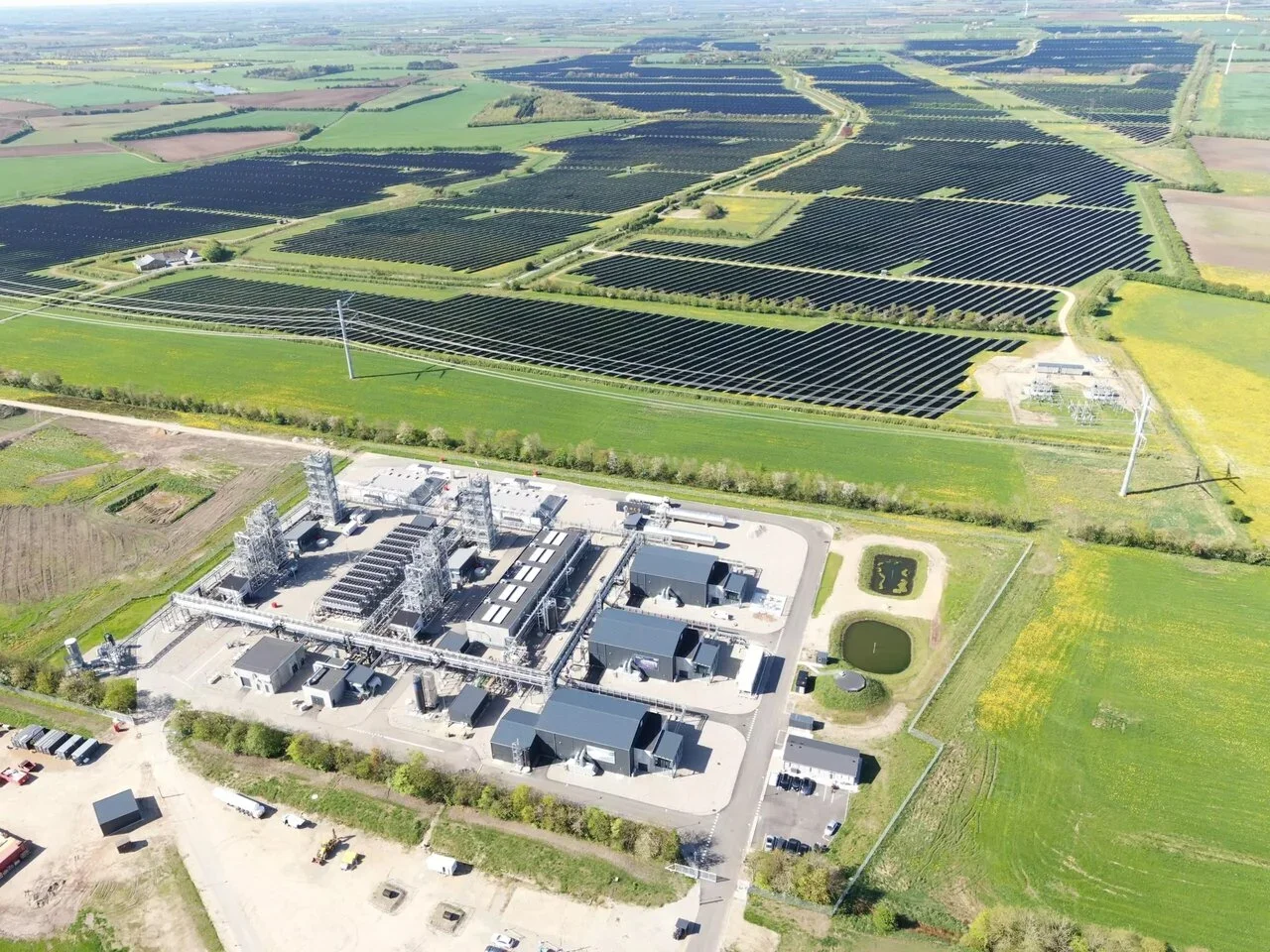
Shipping provides a useful comparison. In May 2025, European Energy and Mitsui inaugurated the Kassø e-methanol facility in Denmark. It has an annual production capacity of 42,000 tonnes and secured demand from companies including Maersk, LEGO and Novo Nordisk.
The underlying technologies are not identical, but the commercial difference is clear: e-methanol for shipping and industrial use has identifiable buyers, developing regulation and concrete offtake arrangements. Synthetic gasoline for private cars has a far weaker demand signal.
What else slowed the project down
Economics and demand are the central issues, but several other factors also affected the pace of development:
Regulatory and permitting delays
The proposed commercial phase depends on major new renewable-energy infrastructure, including the Faro del Sur wind project. Earlier permitting work was withdrawn and reworked, extending the development timeline.
Direct air capture was not ready at the original launch
The early “fuel from air” narrative suggested that carbon dioxide would be captured directly from the atmosphere. In practice, the pilot facility initially used carbon dioxide from a biogenic source. HIF has since continued work on a direct-air-capture unit intended for future integration at Haru Oni.
Higher interest rates
From 2022 onward, rising financing costs made capital-intensive hydrogen and Power-to-X projects more difficult to fund. Even technically viable projects became less attractive when debt and equity became more expensive.
A broader hydrogen-sector slowdown
The challenge is not unique to Chile. The International Energy Agency has repeatedly shown a large gap between announced low-emissions hydrogen projects and projects that have reached final investment decision. Many developers have delayed, reduced or cancelled projects while waiting for stronger policy support and binding customer demand.
Changing priorities among major investors
Automotive and energy companies have faced pressure from weaker demand, high capital costs and changing strategic priorities. Even when a project remains technically attractive, management teams may become more selective about committing additional capital.
The main lesson for the industry
If there is one takeaway from the Haru Oni story, it is this: proving that a technology works is not the same as proving that it is commercially viable.
Haru Oni proved that an integrated renewable-electricity-to-synthetic-fuel chain can be built and operated. The bottleneck was not simply chemistry or engineering. It was the absence of a sufficiently large market willing to pay a premium for a fuel that competes with direct electrification in passenger cars.
For the next generation of green methanol and e-fuel projects, a practical hypothesis emerges: projects serving hard-to-electrify sectors — shipping, aviation and selected industrial applications — and supported by regulation-backed demand are more likely to reach final investment decision than projects focused on replacing gasoline in ordinary passenger cars.
Denmark’s Kassø facility shows what happens when technology is paired with contracted demand. Patagonia’s Haru Oni shows what happens when a technically successful pilot reaches the much harder stage of commercial scale-up.
Selected sources
- Porsche Newsroom — eFuels pilot plant in Chile officially opened
- HIF Global — HIF Haru Oni project page
- OECD — HIF Global e-Fuels Chile case study
- HIF Global — Cabo Negro environmental permit application
- European Energy — Kassø e-methanol facility inaugurated
- Fraunhofer ISI — Costs and efficiency of e-fuels for road transport
- Transport & Environment / Cerulogy — Energy-efficiency comparison
- International Energy Agency — Global Hydrogen Review
Tags: Hydrogen, Green Hydrogen, eFuels, Energy Transition, Porsche, Chile, Clean Energy, Climate Tech